What is the University of Michigan Known For?
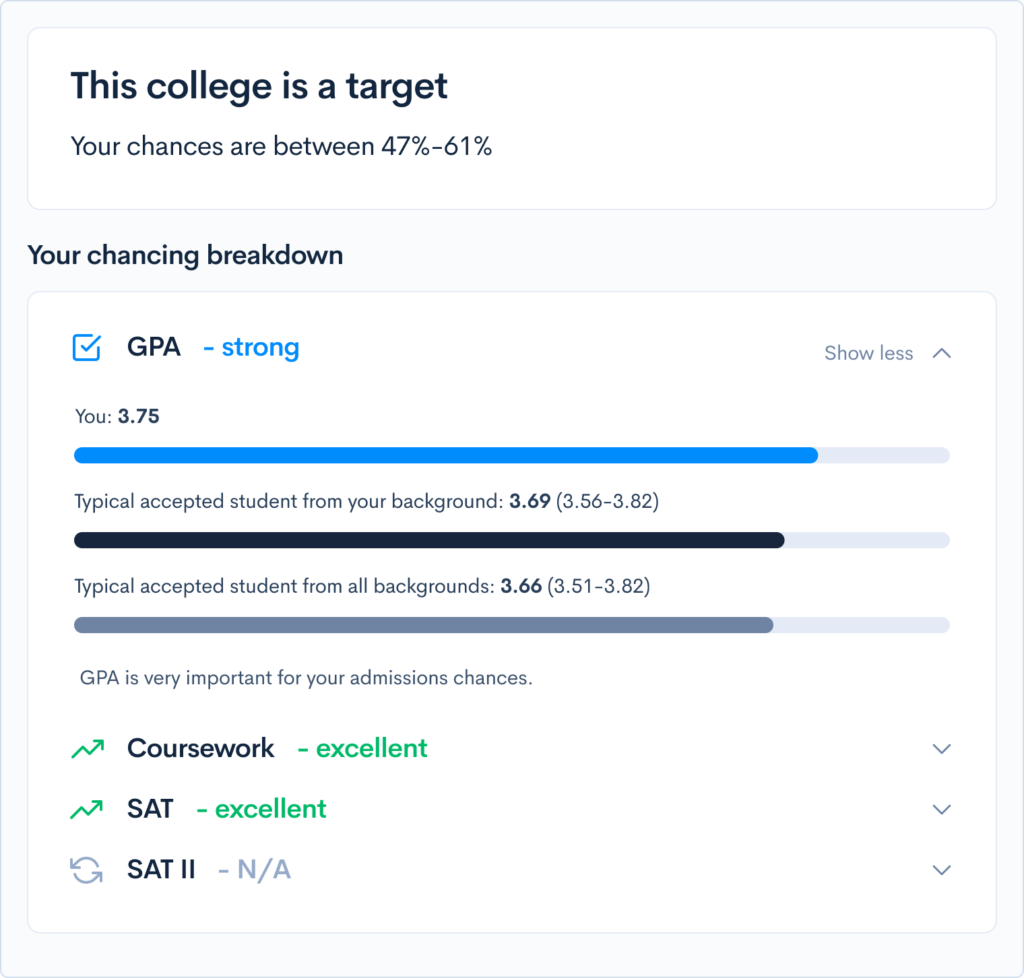
What is the University of Michigan known for? Excellence comes to mind—UMich consistently ranks among the nation’s best national universities, and the Michigan Wolverines are one of the most heralded athletic programs in the country. Even Michigan’s location is superlative, commonly ranking among the best college towns in the nation. If you’re considering UMich, here are the unique aspects of the school, including academics, extracurriculars, traditions, and more. Location: Ann Arbor, MI Undergraduate Enrollment: 34,454 Acceptance Rate: 16% Middle 50% SAT: 1360-1530 Middle 50% ACT: 31-34 There is about a 50/50 split between in-state and out-of-state students at the University of Michigan, but there is a substantial spread in admissions. For in-state students, admission to the University of Michigan is comparable to entering a top 40 to 50 college, while out-of-state students face competition similar to that of a top 25 school. Applying Early Action will give out-of-state applicants a slight boost, but less than that of other colleges with unrestricted early admissions. In-state students gain almost no advantage by applying early. The University of Michigan is a historic, prestigious, and large school; consequently, it has gained a reputation for a broad number of things, from academics to athletics to extracurricular activities and beyond. The defining attribute of the University of Michigan is its excellence as a public institution. It’s among a group of public universities known for their high-ranking academics, storied histories, and selective admissions known as the Public Ivies. The University of Michigan is the top-rated public university on our list of best overall colleges, ranking ahead of notable schools such as the University of Virginia, the University of North Carolina Chapel Hill, and the University of Texas Austin. What major is the University of Michigan known for? The question is better phrased: what major is the University of Michigan not known for? Across 19 schools and colleges, the University of Michigan offers more than 280 degree programs—from Actuarial Mathematics to Women’s and Gender Studies. The one thing all University of Michigan degree programs share is their high-quality reputation. One of the most prestigious undergraduate programs at UMich is the Ross Bachelor of Business Administration (BBA). CollegeVine ranks the Ross School of Business as the tenth-best undergraduate business school in the nation. In 2024, 99% of Ross graduates received a job offer by the fall following graduation and the median base salary for graduates is more than $100,000. Acceptance into the Ross BBA program is challenging—during the 2023 admissions cycle, it had an acceptance rate of just 9% for incoming freshmen. About 80% of the BBA class enters as high school seniors through Preferred Admission. Each year, roughly 100 students transfer from another school or college within the University of Michigan, while around 5% transfer from other colleges or universities. Perhaps the only thing more notable than UMich’s academics is its athletics. The Michigan Wolverines are one of the most recognizable college football teams in the nation and their maize-and-blue uniforms are best described as iconic. The Wolverines’ home stadium, the “Big House,” holds more than 100,000 fans, and when they collectively chant Hail to the Victors, it’s one of the most breathtaking moments in sports. Coinciding with the love University of Michigan students and alumni have for athletic teams is their disdain for their rival, Ohio State. University of Michigan vs. Ohio State is considered by many as the best rivalry in college football—they first squared off in 1897. You don’t want to get caught on campus wearing Ohio State’s scarlet and gray colors during a game week. Football steals the spotlight, but Michigan has also had enormous success outside of the Big House. The men’s hockey team has won nine national championships, its 2005 women’s softball team became the first squad east of the Mississippi to win a national championship, and its “Fab Five” basketball team from the 1990s remains one of the most memorable collegiate basketball teams of all time. Outside of the classroom and athletics, there is an abundance of activities for University of Michigan undergraduates. The school is home to more than 1,700 student-run clubs and organizations offering something for students of every identity and interest. Numerous traditions have incorporated themselves into the lives of UMich undergraduates over the years; one of the best-known is a “walk in the fountain.” Students walk through the Cooley Fountain in Ingalls Mall toward the Diag during orientation to become “official” Wolverines. Upon graduation, students walk through the fountain in the opposite direction, toward Rackham and away from campus. Want to walk both ways through the Cooley Fountain? Then avoid stepping on the “M” in the center of the Diag. Tradition has it that if you do step on the M, you’ll fail your first BlueBook exam. Even students who’ve already taken their first BlueBook exam avoid stepping on the M out of caution. Another colorful tradition at the University of Michigan is painting the rock, which sits at the corner of Washtenaw and Hill Street. The rock was placed in the park to commemorate George Washington’s 200th birthday, but it has been covered in thousands of gallons of paint since the 1950s, either by vandalizing Ohio State and Michigan State fans or by University of Michigan students freshening it up. [amp-cta id="9459"] Students are not required to live on campus at the University of Michigan, but 97% of first-year students choose to do so. In addition to standard dorm and residence hall accommodations, UMich offers both Learning Community and Theme Community living options. Learning communities are made up of students and faculty drawn together by shared goals and common interests. These include: Theme communities are small residential groups of students focused on a particular subject. These include: UMich practices need-blind admissions for in-state students only and will meet 100% of their demonstrated financial need. Through UMich’s Go Blue Guarantee, the university covers tuition and mandatory fees for in-state students from families earning $125,000 or less annually. One in four in-state undergraduates pays no tuition to the university due to financial aid. For out-of-state students, the ability to pay for college is considered in admissions decisions. There are also a variety of merit scholarships for both domestic and international students. The University of Michigan is consistently recognized as one of the better value colleges in the country. The purpose of the University of Michigan’s Law Library is to support its law school students and faculty, but it is an incredible place for anyone to sneak away and study. Designed in an English Gothic style, it’s easy to think that you escaped the University of Michigan and enrolled at Hogwarts. The Arb, otherwise known as the Matthaei Botanical Gardens and Nichols Arboretum, offers easy access to nature for University of Michigan students. The property is jointly owned by the University and the City of Ann Arbor and is used for everything from research and teaching to a simple escape from campus. Ann Arbor is one of the great places to live in the United States and is commonly found on lists of the country’s best college towns and best places to live. The city is prime for cultural exploration, whether it’s theater, music, or food. Speaking of food, ordering a #2 (a Reuben) at Zingerman’s is a must—Obama got one when he visited the city and Opera says “Zingerman’s sandwiches are an 11 on a scale of 1 to 5.” Ann Arbor is also commonly considered one of the most bike-friendly cities in the nation, boasting 90miles of bike lanes and more than 900 bike parking spots. Looking for a reason not to love Ann Arbor? Winter! Ann Arbor winters are cold, harsh, and seemingly last forever. Undergraduates coming from warmer climates find it particularly brutal. The University of Michigan evaluates a student’s entire record. Beyond strong grades in rigorous courses, applicants are expected to have high SAT/ACT scores, meaningful extracurricular involvement, leadership experience, awards, and community service. If this sounds like a lot, it is; that’s one reason for the university’s low acceptance rate. If you’re interested in your chances of getting into the University of Michigan, CollegeVine can help. Our free admissions calculator uses your grades, test scores, and extracurriculars to estimate your odds of acceptance. In addition, it can provide insight into your college profile and show you what needs improvement. Sign up for your free CollegeVine account today to take advantage of this powerful tool! What’s Covered:
Overview of the University of Michigan Admissions
Unique Aspects of the University of Michigan
Academics
Extracurriculars
Traditions

Dorms
Financial Aid
Resources
Location
What are Your Chances of Acceptance at the University of Michigan?