copy.jpg)
What is Johns Hopkins University Known For?
When you think of Johns Hopkins University (JHU), you likely associate it with medicine. While many undergraduates do pursue a pre-med track and ultimately go on to medical school, Johns Hopkins has more to offer than just pre-med. The first research university in the United States is also renowned for its breadth of rigorous, top academic offerings and community in Baltimore, Maryland. Discover what sets Johns Hopkins University apart and explore the defining elements of life and learning at this unique university. Location: Baltimore, Maryland Undergraduate Enrollment: 6,356 Acceptance Rate: 6% Middle 50% SAT: 1530-1560 Middle 50% ACT: 34-36 Johns Hopkins is consistently ranked among the top schools in the U.S. Admissions officers look for students who are not only academically talented but also involved in their communities. JHU is one of the few schools to release its own “Essays That Worked,” implying that they place special importance on the college essays, which share a student’s personality and potential fit with the university. We also have a guide to writing the Johns Hopkins essays, which includes tips on how to write an essay that will impress admissions officers. Hopkins is well known for its pre-med program, with many students going on to medical school after graduation. According to the university, the admission rate to medical schools for JHU graduates is 85%. But students also pursue other careers and niches. For example, the university also claims that 97% of law school applicants are admitted. One of the most notable programs Johns Hopkins offers is biomedical engineering—it consistently ranks among the best programs of its kind in the nation. Because the major is so rigorous and prestigious, students must list biomedical engineering as their first-choice major, as opposed to other majors, where students apply to the university undeclared. Students may also be admitted to the university without being admitted to the BME program. The university is also famous for its International Studies Program. In addition to the popular undergraduate major, Hopkins has several dual-degree paths. One option is the five-year BA/MA program, in which students spend three years at the Homewood campus in Baltimore and two at the Johns Hopkins School of Advanced International Studies (SAIS) in Washington, D.C., to earn an MA in International Relations along with their bachelor’s degree. SAIS also operates in Bologna, Italy, and Nanjing, China. Another option is the five-year BA/MA program in which students learn at Hopkins and Sciences Po Paris in France. The Peabody Conservatory is part of Hopkins, and the campus is located near Homewood. Students may pursue a dual-degree path, earning both a BA or BS from the Krieger School of Arts and Sciences or the Whiting School of Engineering and a Bachelor of Music or BFA from Peabody simultaneously. Students must be admitted independently to both Peabody and one of the Homewood schools. Regardless of their major, JHU students enjoy significant flexibility. While the university does not have a core curriculum, there are some distribution requirements. Just under 70% of undergraduates pursue either a double major or a major with a minor. Although JHU is not a sports-centric school, it is known for its titles in lacrosse. The men’s and women’s lacrosse teams are the only athletic teams at the university that compete in NCAA Division I. The men’s team holds 44 national titles, including nine NCAA championships. Another notable athletic team is the fencing team, a Division III team. Hopkins offers plenty of extracurricular activities for practically every interest you can imagine (and if you can’t find your niche, you can start a club of your own). The student-run newspaper, The News-Letter, is one of the oldest continuously published college newspapers in the country. On several occasions, it’s been the recipient of the Associated Collegiate Press Newspaper Pacemaker award in the four-year college non-daily newspaper division. Founded in 1876, Hopkins has a rich history with several notable traditions. One example is the Lighting of the Quads, which takes place before winter break. The celebration includes performances, food, art displays, and a countdown to the president’s flipping of the switch to turn on the festive lights. In the spring semester, students and residents of the local community gather on Homewood for Spring Fair, which offers student-run and local business-run booths, funnel cake and other food, a beer garden, arts and crafts, music, and a concert featuring renowned artists. [amp-cta id="9459"]
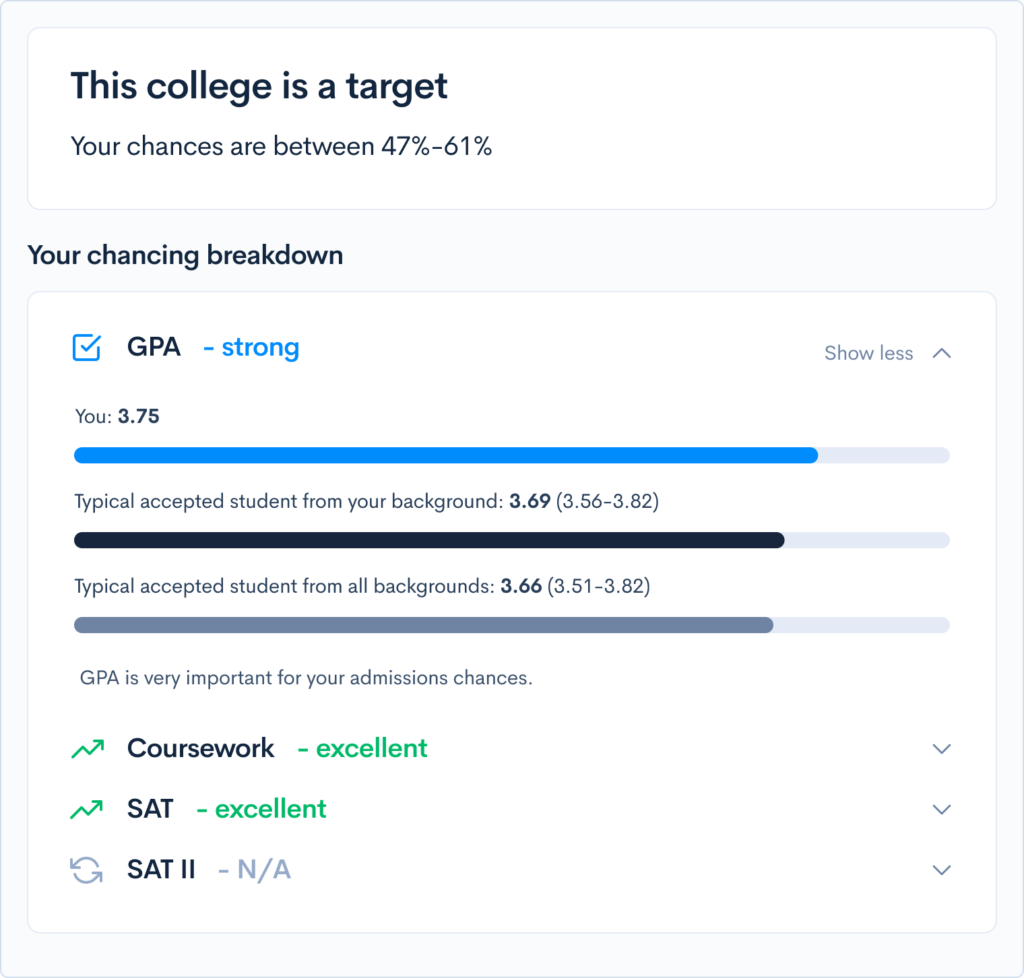
All full-time Homewood first- and second-year students are guaranteed housing and required to live on campus or with a parent or guardian. In addition to dormitories, the university owns a number of apartments near campus. Scott-Bates Commons is an example of Johns Hopkins’ dorms, completed in Fall 2006. The two connected buildings are home to more than 600 residents who live in single rooms in two- or four-person suites. The building also includes common lounges, a dining facility, a two-sided fireplace, a fitness room, meeting spaces, a game room, a faculty member and graduate assistant in residence, a community kitchen, and a music room. In 2018, Johns Hopkins alum Michael Bloomberg, the former mayor of New York City, donated $1.8 billion to his alma mater to make JHU need-blind. This is the largest gift to an academic institution in U.S. history. The university is also no-loan and meets 100% of demonstrated financial need. Hopkins provides numerous resources to its students. Shuttles operate between its Homewood campus and other JHU facilities and are available on-demand at certain times and within designated parameters. Students can also access the Baltimore Collegetown Shuttle, which serves students at nearby colleges, too, and takes passengers to destinations like Inner Harbor. Hopkins also has accounts with products and services like the Calm app, which students can use for free. One notable program is Hop Art, through which students can attend Baltimore performances and shows for free at venues and institutions like the Baltimore Symphony Orchestra. Students can enter a drawing to win tickets for each event. Johns Hopkins is a highly selective school, and admission is extremely competitive. Whether you’re a biomedical engineering hopeful or want to pursue a degree in international studies, it’s important to know what you need to do to get in—and how your profile stacks up. With CollegeVine’s free admissions calculator, you can find out. The tool takes your test scores, grades, extracurriculars, and other factors into account to determine your real chances of acceptance to Johns Hopkins and many other colleges in the United States. Plus, you’ll get personalized tips for improving your profile. What’s Covered:
Overview of Johns Hopkins
Unique Aspects of Johns Hopkins
Academics
Extracurriculars
Traditions

Dorms
Financial Aid
Resources
What Are Your Chances of Acceptance at Johns Hopkins?