The Top 10 Most Underrated Colleges in the U.S.
What’s Covered:
There are many great schools that get passed over in most college rankings. Many of the students who use CollegeVine’s resources are surprised to find new schools to add to their lists that offer better financial aid and job outcomes than they might have realized.
Through research and data analysis, we’ve found 10 schools around the country that are consistently underrated, but that students and parents should also definitely not discount.
How We Put This List Together
The traditional college rankings do a decent job of ranking the best universities, but because of how these formulas are constructed, there are some serious factors that get left out. When we look to advise what makes a successful college underrated, our primary focus is on outcomes—more specifically financial outcomes like starting salary and ROI, as well as qualitative outcomes like job placements.
In making this list, we took into consideration the following criteria:
- Cost of attendance and generosity of financial aid & scholarships
- One- and five-year ROI after graduation
- Financial performance of specific majors
- Qualitative data on career outcomes like job placements and grad school progression
The 10 Most Underrated Colleges in the U.S.
1. San José State University | SJSU
Location: San Jose, CA
Acceptance Rate: 84%
Undergrad Enrollment: 28,000
San José State is chronically underrated by guidance counselors, and is therefore often overlooked by families. Because of its location in the heart of Silicon Valley, students pursuing STEM have really good outcomes. This can be at least partly attributed to the job market in the Bay Area.
San José State tends to be ranked outside of the top 250 national universities, but, based on CollegeVine’s analysis, for most STEM majors—e.g., computer science, statistics, data science, electrical engineering, etc.—San Jose State is comfortably in the top 40 when it comes to return on investment.
Learn more about San José State University and what it takes to get accepted.
2. University of Houston
Location: Houston, TX
Acceptance Rate: 66%
Undergrad Enrollment: 37,900
This is another school that has strong STEM outcomes, particularly in more “physical-world” subjects like petroleum engineering, chemical engineering, and other hard sciences. In particular, US News ranks Houston as the #171 college in the country, but the strength of the Houston job market and the excellent merit scholarships put its ROI comfortably in the Top 40 for such programs.
In particular, Houston offers substantial scholarships to National Merit scholars and very strong scholarships to any students with Top 20% class rankings and 1250+ on the new SAT, or 26+ on the ACT.
Learn more about University of Houston and what it takes to get accepted.
3. Binghamton University, SUNY
Location: Binghamton, NY
Acceptance Rate: 38%
Undergrad Enrollment: 14,400
SUNY Binghamton’s success (it’s typically ranked within the top 100 national universities) is primarily driven by its status as the de facto flagship of the SUNY system. Another way of understanding SUNY and CUNY colleges is that they are, for academically qualified students, often the “cheapest” way to get good access to the NYC job market.
SUNY Binghamton is frequently regarded as a “Public Ivy” due to the high quality of its educational offerings.
Learn more about SUNY Binghamton University and what it takes to get accepted.
4. City College of New York | CCNY
Location: New York, NY
Acceptance Rate: 64%
Undergrad Enrollment: 12,300
The City College of New York (CCNY) and SUNY Binghamton (see number 3) can be grouped together in that their top 50 national ROIs in all kinds of majors are driven by recruiting from New York City. CCNY is located in the Hamilton Heights neighborhood of northern Manhattan, which grants it prime access to the NYC job market.
The school has graduated 10 Nobel Prize laureates and 3 Pulitzer Prize winners. CCNY is rich with history, having been home to the first student government in the nation, the first national fraternity to accept members without regard to religion or race (Delta Sigma Phi), and the first degree-granting evening education program.
Learn more about The City College of New York and what it takes to get accepted.
5. George Mason University
Location: Fairfax, VA
Acceptance Rate: 88%
Undergrad Enrollment: 27,000
For students aiming for a career in politics, government work, law, or even the humanities, Washington, D.C., is an incredibly important place to have access to.
In the aforementioned fields, Georgetown is a well-known institution in a class of its own. After scholarships and financial aid, however, George Mason offers pretty comparable career outcomes to George Washington University and American University. It also has one of the most influential economics departments for a college not named Harvard or UChicago.
Learn more about George Mason University and what it takes to get accepted.
6. Worcester Polytechnic Institute | WPI
Location: Worcester, MA
Acceptance Rate: 60%
Undergrad Enrollment: 5,200
WPI really benefits from Boston’s reinvention as a modern tech industry hub in the last 20 years—in that sense it’s a parallel to San José State because STEM professions are the home run ROI. WPI places in the top 100 universities in the U.S., as well as in the top 35 for ROI and career outcomes.
The other thing that works to WPI’s benefit is that Massachusetts doesn’t have a true public Ivy as its flagship—unlike other states like California (UC Berkeley/UCLA), Michigan, or Virginia. Students interested in pursuing Business, STEM, or pre-med programs should give Worcester Polytechnic Institute more than a cursory glance.
Learn more about Worcester Polytechnic Institute and what it takes to get accepted.
7. Fordham University
Location: Bronx, NY
Acceptance Rate: 58%
Undergrad Enrollment: 10,000
This is another sleeper school that benefits from its location in New York City. The standout factor here is its majors related to the finance industry, both finance itself and related majors like economics, applied math, and computer science.
Essentially all majors related to business at Fordham have strong ROI outcomes. Note that Fordham is a private university, so if a family doesn’t qualify for merit or financial aid, it might not be a perfect match. With that said, for high-achieving students looking for a good “safety” school to pair with options like NYU or Boston College, Fordham University—both its Bronx and Manhattan campuses—could be a great fit.
Learn more about Fordham University and what it takes to get accepted.
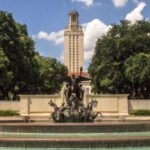
8. University of Texas at Austin | UT Austin
Location: Austin, TX
Acceptance Rate: 29%
Undergrad Enrollment: 44,300
UT Austin is already highly regarded, but it is often overlooked in college conversations. UT Austin offers excellent financial outcomes and ROI thanks to its relative affordability, its large scholarship pool, and the roaring job market in Austin, Dallas, and Houston (cities where UT Austin is only just behind top 15 school Rice in terms of recruiting importance).
UT Austin has a credible argument for being the second or third highest ranked public university in the U.S. behind UC Berkeley and potentially Georgia Tech on the basis of outcomes.
Learn more about the University of Texas at Austin and what it takes to get accepted.
9. Babson College
Location: Babson Park, MA
Acceptance Rate: 25%
Undergrad Enrollment: 2,500
According to CollegeVine’s data for career outcomes, Babson College ranks in the top 10 for starting salaries and ROI in a variety of business-related majors such as accounting and entrepreneurship. In fact, for students specifically interested in studying undergraduate business, Babson delivers student outcomes comparable to those at Ivy League universities.
Moreover, Babson offers strong financial aid and excellent merit scholarships, for which students academically qualified for the Ivy League would be quite strong contenders. Also, Babson is located in the robust Boston job market.
The other standout (more of a qualitative selling point) is Babson’s excellent student entrepreneurship DNA, which shows up in a requirement for all students to start and run a business (along with classmates) while on campus.
Learn more about Babson College and what it takes to get accepted.
10. Wellesley College
Location: Wellesley, MA
Acceptance Rate: 16%
Undergrad Enrollment: 2,500
Wellesley is similar to Babson in that it offers Ivy League comparable outcomes for students in a particular demographic. The difference, of course, is that in Wellesley’s case, the demographic in question is women.
For women aiming for top-tier universities, Wellesley offers outcomes on par with or even superior to those of many Ivy League colleges due in particular to the strength of the Boston job market and the degree to which firms looking to access diverse pools of talent recruit specifically at Wellesley. Wellesley also has disproportionately strong outcomes for the humanities and social sciences, which is relatively rare to see amongst the schools on this list.
Learn more about Wellesley College and what it takes to get accepted.
For More Information
With these schools in mind, you may have found a college that aligns with your future med school goals. At CollegeVine, we’re committed to making college guidance accessible to all who want it. That’s why, on our college applications guidance platform, you can use our free chancing engine, build a best-fit school list, and learn how to improve your profile—all for free.
Sign up for a CollegeVine account today to get a boost on your journey to a college as a pre-med. Also check out Sage, our AI tutor and advisor, who can improve your chances of acceptance to your dream school by helping you show what you have to offer beyond the numbers!